For most Indian kitchens, the best kitchen tiles are glossy or satin ceramic or GVT tiles (300×600 mm) on the walls, an anti-skid matte vitrified tile (600×600 mm, R10 or better) on the floor, and a feature tile such as 75×150 mm subway or a patterned 200×200 mm tile on the backsplash. Fill the joints behind the hob and sink with epoxy grout so oil and turmeric stains wipe off. Typical prices run from about ₹30 per sq ft for plain ceramic wall tiles to ₹400 per sq ft for glass mosaic.
In this guide
- 1.Which tiles are best for kitchen walls, floors and backsplash?
- 2.What size tiles are best for a kitchen?
- 3.How many tile boxes do you need for a kitchen wall?
- 4.Glossy or matte: which kitchen tile finish is better?
- 5.Epoxy or cement grout: which is better for a kitchen?
- 6.What are the best kitchen tile design ideas?
- 7.Frequently asked questions
Which tiles are best for kitchen walls, floors and backsplash?
A kitchen has three tile zones, and each has a different job. Walls need a tile that is easy to wipe and light enough to stay up with adhesive. Floors need grip when wet, and a hard surface that will not chip when a steel vessel drops. The backsplash, the strip between the counter and the wall cabinets, takes the most splashes and tadka smoke, so it needs the most stain-resistant surface and is where most people add a design feature.
Ceramic tiles are fine on walls but too soft for a busy floor. Vitrified tiles (including GVT, glazed vitrified tiles) absorb under 0.5% water, so they suit both walls and floors. Porcelain is a dense vitrified body, often in thicker or full-body versions. Glass mosaic and handmade cement tiles are best kept to the backsplash.
| Tile type | Best use in a kitchen | Common sizes | Typical price per sq ft |
|---|---|---|---|
| Ceramic wall tile (glossy or satin) | Walls and dado above the counter | 300×450, 300×600, 250×375 mm | ₹30–₹70 |
| Vitrified / GVT (glazed vitrified) | Floors and walls; large clean surfaces | 600×600, 600×1200 mm | ₹45–₹120 |
| Porcelain (full-body or thick) | Heavy-use floors, commercial kitchens | 600×600, 800×1600 mm | ₹60–₹200 |
| Glass mosaic | Backsplash feature strip | 300×300 mm sheets of small chips | ₹150–₹400 |
| Subway tile (ceramic) | Backsplash, café-style full walls | 75×150, 100×300 mm | ₹60–₹200 |
| Moroccan / patterned tile | Backsplash or a single feature wall | 200×200 mm | ₹60–₹180 (handmade cement more) |
Browse the full range of kitchen and bathroom tiles and floor tiles with live bulk prices, or the wider tiles, stone and sanitaryware category for adhesive, grout and slabs.
What size tiles are best for a kitchen?
300×600 mm is the most common kitchen wall tile in India today. It has fewer joints than the older 300×450 mm size, so there is less grout to clean, and it fits standard wall heights neatly. 300×450 mm ceramic is still the budget choice.
75×150 mm subway tiles have lots of joints, which is the point: they give a classic café look and can be laid in brick, stacked or herringbone patterns. 100×300 mm bevelled subway tiles give the same look with fewer joints. 200×200 mm is the usual size for Moroccan and patterned backsplash tiles.
For floors, 600×600 mm vitrified is the standard. In a small kitchen (under 80 sq ft), 600×1200 mm tiles can look great but need a very flat floor and more cutting around the platform base. Use tile levelling clips on any tile 600 mm or larger to stop lippage.
Popular kitchen wall and backsplash tiles
Live prices, excl. GST Ready price
Stain-resistant ceramic wall tiles for kitchen walls and dados. Box of 8 covers 1.44 sq m (15.5 sq ft).
 Ready price
Glazed wall tiles for bathrooms and kitchens, with matching highlighters. Box of 6 covers 0.81 sq m.
 Ready price
Classic brick-style ceramic tiles for kitchen backsplashes, bathrooms and cafe walls. Box covers 1 sq m.
 Ready price
Long bevelled subway tiles in deep colours for feature walls, bars and kitchen backsplashes. Box: 1 sq m.
 Ready price
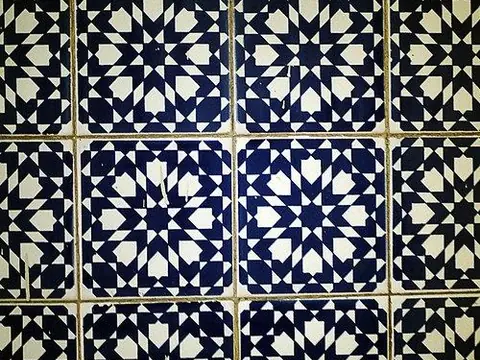
Patterned ceramic tiles for the wall behind the hob and sink. Box of 25 covers 1 sq m (10.8 sq ft).
 Ready price
Mesh-backed 25 mm glass chips for shower niches, pool lining and accent strips. Price per sheet.
How many tile boxes do you need for a kitchen wall?
Tiles are sold by the box, and each box covers a fixed area printed on the label. The maths is simple: wall area + wastage, divided by box coverage, rounded up. Measure in feet, and remember 1 m² = 10.76 sq ft.
Worked example: a 10 ft kitchen wall, tiled full height to 7 ft. Area = 10 × 7 = 70 sq ft. Add 5% wastage for a straight lay: 70 × 1.05 = 73.5 sq ft. One 300×600 mm tile covers about 1.94 sq ft, so you need 73.5 ÷ 1.94 = about 38 tiles. If the box holds 5 tiles (about 9.7 sq ft), that is 73.5 ÷ 9.7 = 7.6, so buy 8 boxes.
Backsplash only: the same 10 ft wall with a 2 ft high backsplash is 20 sq ft. In 75×150 mm subway tiles (about 8.3 tiles per sq ft) laid in herringbone, add 10% wastage: 22 sq ft, or roughly 182 tiles. Divide by the box coverage on the label.
Box calculation checklist
- Measure each wall separately: length × height in feet. Do not deduct for small switch boards; deduct windows only if they are larger than about 4 sq ft.
- Add 5% wastage for a straight lay, 10% for diagonal or herringbone, and 10–15% for patterned tiles that must be matched.
- Check the tiles per box and sq ft per box on the label; it differs by brand and size.
- Order all boxes from one batch (same shade and calibre code) so colour and size match.
- Keep one spare box for future repairs; the same design is often discontinued within two years.
- Plan adhesive at roughly one 20 kg bag of polymer adhesive per 40–50 sq ft of wall tile with a 6 mm notched trowel; confirm with the bag's coverage chart.
Glossy or matte: which kitchen tile finish is better?
Glossy tiles are best on walls. They reflect light, make a small kitchen look bigger and wipe clean in one pass. Their weak point is that they show water spots and fine scratches, which matters little on a wall.
Matte or anti-skid tiles are the only sensible choice for the floor. A glossy floor tile becomes dangerous the moment water, oil or dal spills on it. Satin or soft-matte is a good middle ground for walls if you want a calmer, modern look.
For floors, look for a slip rating of R10 or higher (on the DIN 51130 scale) for home kitchens and R11 or higher for commercial kitchens, or a wet coefficient of friction of about 0.6 or more if the brand quotes that instead. Also check the surface wear rating: PEI 3 or above for a home kitchen floor.
Kitchen floor tiles
Live prices, excl. GST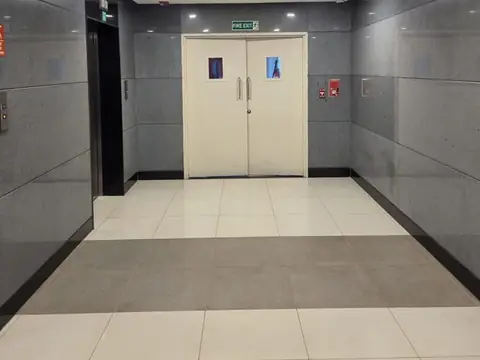 Ready price
Thick colour layer that does not wear off. For offices, shops and lobbies. Box of 4 covers 1.44 sq m.
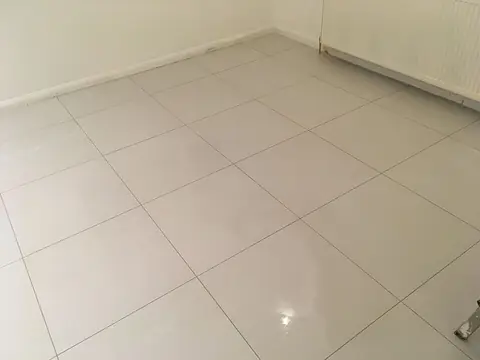 Ready price
Everyday floor tiles for homes and offices. Box of 4 tiles covers 1.44 sq m (15.5 sq ft).
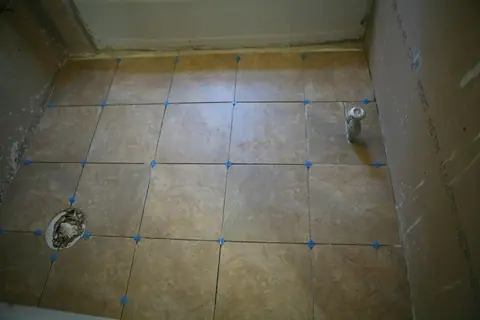 Ready price
Rough-finish ceramic floor tiles for wet bathrooms, wash areas and balconies. Box of 10 covers 0.9 sq m.
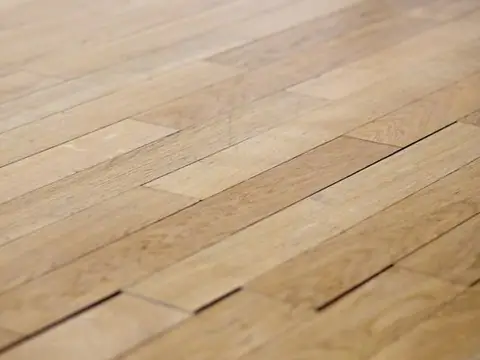 Ready price
Wood-look vitrified planks for bedrooms and cafes. No termites, no polishing. Box of 4 covers 0.96 sq m.
 Ready price
Thick R11 porcelain pavers for terraces, driveways and pool decks. Box of 2 covers 0.72 sq m (7.75 sq ft).
Double-charge vitrified tiles have a 3–4 mm thick pattern layer, so the design survives years of mopping. That makes them a strong choice for kitchen floors that also run into the dining area.
Epoxy or cement grout: which is better for a kitchen?
Cement grout is cheap and easy to apply, but it is porous. Behind the hob it soaks up oil, haldi and smoke, turns yellow-brown within months and grows mould near the sink.
Epoxy grout is a two- or three-part resin that sets hard and non-porous. Stains wipe off, it does not need sealing and it resists the acids in lemon and vinegar. It costs several times more than cement grout and must be cleaned off the tile face within about 30–45 minutes, so use a tiler who has worked with it before.
A practical split: epoxy grout on the backsplash, around the sink and on the kitchen floor, and cement or polymer grout on wall areas that rarely get dirty. Keep joints at 2–3 mm for wall tiles and subway tiles, and follow the tile maker's spacing for large vitrified tiles. Fix vitrified tiles on walls with a C2-class polymer adhesive, not a sand-cement mortar, because they absorb almost no water and will not bond well to plain mortar.
Fixing materials
Live prices, excl. GST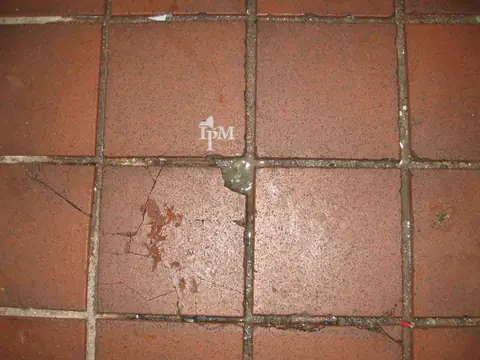 Ready price
Stain-proof, waterproof grout for kitchens, bathrooms and pools. 1 kg kit fills about 30 sq ft.
 Ready price
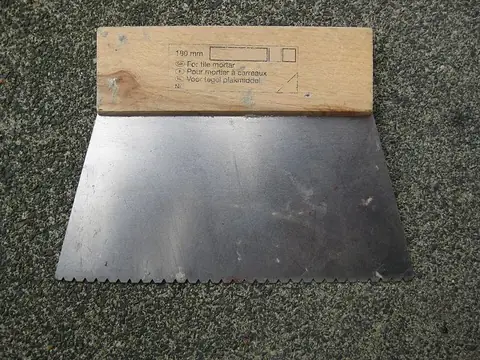
Cement-polymer adhesive for vitrified tiles on floors and walls, no soaking needed. 20 kg bag.
 Ready price
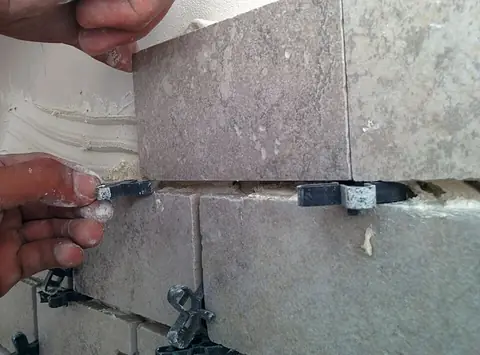
Keep large tiles flat with no lippage. Bag of 100 clips; reusable wedges sold separately.
What are the best kitchen tile design ideas?
Subway herringbone backsplash. White 75×150 mm subway tiles in a herringbone pattern, with a grey or charcoal epoxy grout, give a timeless look that hides small stains. Budget an extra 10% for cuts.
Highlighter rows. Lay plain 300×600 mm glossy tiles on the full wall and add one or two rows of patterned, mosaic or wood-look tiles at the backsplash level. It looks designed but costs far less than a full feature wall.
Full-height dado. Tile the whole wall from counter to ceiling (or to the top of the wall cabinets). It is the easiest to clean and avoids a paint line that gets greasy above the backsplash. Large 600×1200 mm GVT slabs make this look almost seamless.
Moroccan or Athangudi accent. Use a 200×200 mm patterned tile only on the backsplash or on the wall behind open shelves, and keep the rest plain so the room does not feel busy.
Tiles are only one part of the kitchen budget. For carcass boards, shutters and hardware, see the modular kitchen cost per sq ft guide. Fitting out several kitchens? Tell us the tile sizes and quantities and we will quote them together: get a bulk quote, or see what we stock for interior designers.
Frequently asked questions
Which tile is best for a kitchen wall?
Glossy or satin ceramic or glazed vitrified tiles in 300x600 mm are the most popular choice for kitchen walls in India. They wipe clean easily, reflect light and have fewer grout joints than smaller tiles.
Which tile is best for a kitchen floor in India?
A matte or anti-skid vitrified tile, usually 600x600 mm, with a slip rating of R10 or higher for homes and R11 or higher for commercial kitchens. Avoid glossy tiles on kitchen floors because they become slippery when wet.
What is the price of kitchen tiles per sq ft in India?
Plain ceramic wall tiles typically cost about Rs 30 to Rs 70 per sq ft, vitrified and GVT tiles about Rs 45 to Rs 120, subway tiles about Rs 60 to Rs 200, and glass mosaic about Rs 150 to Rs 400 per sq ft, before GST and laying charges. Prices vary by brand, city and order size.
How many tiles do I need for a kitchen backsplash?
Multiply the backsplash length by its height in feet, add 5 percent wastage for a straight lay or 10 percent for herringbone, and divide by the coverage per box. A 10 ft long, 2 ft high backsplash is 20 sq ft, so about 21 to 22 sq ft of tiles.
Is epoxy grout necessary for kitchen tiles?
It is not mandatory, but it is strongly recommended behind the hob, around the sink and on the floor. Epoxy grout is non-porous, so oil and turmeric stains wipe off, while cement grout absorbs stains and discolours over time.
Are subway tiles good for Indian kitchens?
Yes. Glossy ceramic subway tiles are easy to clean and suit Indian cooking well, as long as you use epoxy grout, because they have many joints. Use 100x300 mm subway tiles if you want the same look with fewer joints.
Should kitchen wall tiles go up to the ceiling?
Full-height tiling is easiest to maintain because there is no painted strip above the backsplash to collect grease. If budget is tight, tile from the counter up to the bottom of the wall cabinets and use washable paint above.
Get this list priced in 24 hours
Add the items to your requirement list or just tell us what you need. One quote in 24 hours, zero commission, GST invoice.
Prices on this page come live from the YesBatch catalogue, exclude GST and are for the listed minimum order. Your quote confirms the final price for your quantity, city and delivery date. For the full range, browse supplies for interior designers and fit-out firms.