A good product label for the Indian market does two jobs: it sells on the shelf and it carries the mandatory declarations. For packaged food that means the product name, ingredients, nutrition table, veg/non-veg mark, FSSAI logo and licence number, net quantity, MRP inclusive of all taxes, date of manufacture and best before, manufacturer's address and consumer-care details. Choose BOPP labels for anything chilled, oily or wet, and paper labels for dry products.
In this guide
- 1.What must a food product label include in India?
- 2.Where should each element go on the label?
- 3.What label size should you use for jars, bottles and pouches?
- 4.Paper or BOPP: which label material is best?
- 5.How do you prepare a print-ready label file?
- 6.How do you get nutrition values and shelf life for your label?
- 7.Frequently asked questions
What must a food product label include in India?
Packaged food labels are governed mainly by the FSSAI Labelling and Display Regulations, 2020 and, for quantity and price, the Legal Metrology (Packaged Commodities) Rules, 2011. Use this checklist before every print run, and have your final artwork reviewed against the current regulations, because rules are amended from time to time.
Mandatory declarations on packaged food
- Name of the food, describing its true nature (not just the brand name).
- List of ingredients in descending order of weight, with food additives declared by class name and INS number.
- Nutrition information per 100 g or 100 ml (and per serve where required): energy, protein, carbohydrate, total and added sugars, total fat, saturated and trans fat, cholesterol and sodium.
- Veg or non-veg symbol: a green filled circle in a green square for vegetarian, a brown triangle in a brown square for non-vegetarian, near the product name.
- FSSAI logo and the 14-digit licence or registration number.
- Net quantity in metric units (g, kg, ml, l).
- MRP inclusive of all taxes, and the unit sale price (for example ₹ per kg) where the rules require it.
- Date of manufacture or packing and best before or use by date, plus a batch or lot number.
- Name and complete address of the manufacturer (and of the packer or marketer, if different).
- Consumer-care details: a phone number and email address for complaints.
- Allergen declaration for ingredients such as nuts, milk, gluten or soy, and storage or usage instructions where relevant.
- Country of origin for imported food.
Where should each element go on the label?
Think of the label in two zones. The front, or principal display panel, carries the brand, the product name, the veg/non-veg mark and the net quantity, and is what a shopper sees in under two seconds. The back or side panel carries the ingredients, nutrition table, FSSAI details, manufacturer address, dates, MRP and consumer care.
The regulations set minimum letter heights based on the panel size, so tiny 8 ml or 20 g packs need a careful layout. If everything will not fit on a small label, use a fold-out (peel-and-read) label or move the mandatory text to a printed outer carton, as allowed for small packs.
Leave space for the batch number, dates and MRP to be printed after filling with an inkjet or thermal coder, instead of reprinting labels every batch.
What label size should you use for jars, bottles and pouches?
Measure the flat area of the container, not its height. On a jar, the label should stop short of the curved shoulder and base so it does not wrinkle. Leave a few millimetres clear at the top and bottom, and decide whether the label wraps fully or leaves a clear window.
| Pack | Typical label | Material tip |
|---|---|---|
| 100–250 g glass jar | 2×3 in or 3×4 in front label | Clear or white BOPP for a no-label look |
| 500 g jar or tub | 3×4 in front, separate back label | White BOPP, gloss or matte |
| 200–500 ml bottle | Wrap-around, 3–4 in tall | Waterproof BOPP for chilled drinks |
| Stand-up pouch | 3×4 in or 4×5 in sticker, or print the pouch | Printed pouch is cheaper at higher volumes |
| Mono carton | Print directly on the carton | Use the carton for the full back-panel text |
Paper or BOPP: which label material is best?
Paper labels (chromo or maplitho) are the cheapest and look natural on kraft packs, but they tear, stain with oil and peel off when wet. Use them for dry products such as spices, tea and baked goods kept at room temperature.
BOPP labels are a plastic film: white, clear or metallised. They resist water, oil and refrigeration, so they are the default for sauces, pickles, ghee, beverages, dairy and cosmetics. Clear BOPP on a glass jar gives a premium "printed on the glass" look.
Finish matters too: gloss lamination makes colours pop, matte feels premium, and foil or spot UV highlights the logo. For squeezable bottles, ask for a flexible PE label so it does not crease.
Labels and packs
Live prices, excl. GST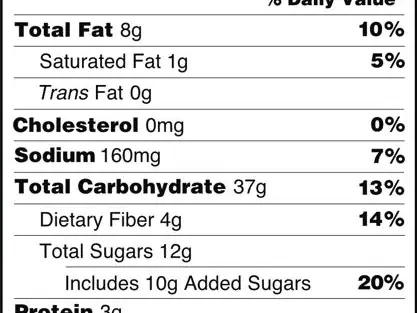 Price on quote
Checked for FSSAI rules before print.
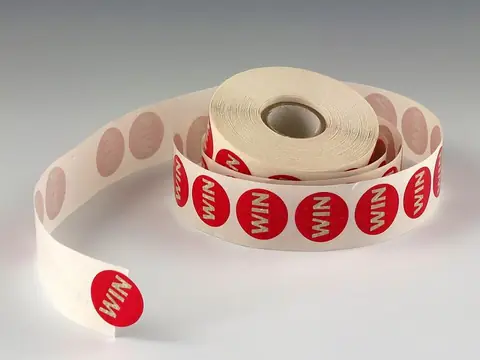 Price on quote
BOPP label that doesn't peel in water.
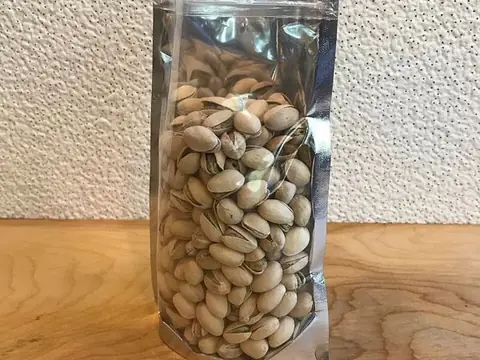 Price on quote
Food-safe pouch with zip. Printed with your design.
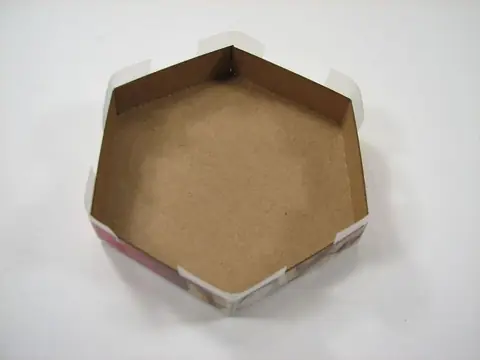 Price on quote
Single-product carton for 30–100ml bottles.
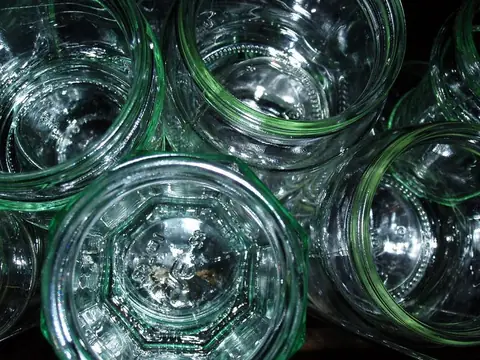 Ready price
For jams, spreads, honey and pickles.
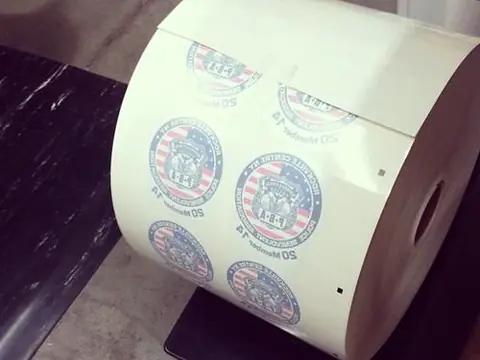 Ready price
Semi-gloss paper labels for thermal-transfer printers. 1-inch core, ready to print.
How do you prepare a print-ready label file?
Most reprints are caused by file problems, not printing problems. Send your printer a file that follows these basics.
- Design at the exact label size with 2–3 mm bleed on every side and keep text inside a 3 mm safe zone.
- Use CMYK colour (plus Pantone references for brand colours) and images at 300 dpi.
- Convert fonts to outlines and keep the smallest text above the legal minimum height for your panel size.
- Get a GS1 India EAN-13 barcode if you will sell in modern retail or on marketplaces, and test that it scans at print size.
- Approve a physical proof on the actual material: colours on BOPP and paper look different from your screen.
- Tell the printer the roll direction and core size if labels will go on a labelling machine.
How do you get nutrition values and shelf life for your label?
The nutrition table should come from a lab analysis of your final recipe (or a well-documented calculation where permitted), and the best-before date should come from a shelf-life study under realistic storage conditions. Guessing either is risky: a wrong label can mean a recall of the whole batch.
Order the tests before you finalise artwork, so the numbers on the first print run are right.
Tests to run before you print
Live prices, excl. GST Service
Energy, protein, fat, carbs and more for your label.
 Service
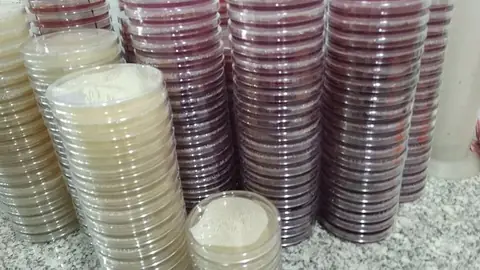 Service
Bacteria, yeast and mould count, and harmful germs.
Launching a food brand? Browse packaging and labels for snacks and namkeen, spices and masalas and sauces, pickles and spreads.
Frequently asked questions
Is the FSSAI logo mandatory on food labels?
Yes. Packaged food sold in India must show the FSSAI logo with the 14-digit licence or registration number of the food business on the label.
What is the veg and non-veg symbol on food packaging?
Vegetarian food carries a green filled circle inside a green square. Non-vegetarian food carries a brown triangle inside a brown square. The symbol is shown on the front panel, close to the product name.
What is the best material for food product labels?
BOPP film labels are best for anything chilled, oily or wet, such as sauces, pickles, ghee and drinks. Paper labels are fine for dry products kept at room temperature.
Does MRP on the label have to include GST?
Yes. Under Legal Metrology rules, the MRP printed on a retail pack must be inclusive of all taxes.
Can I print the batch number and dates later?
Yes. Most brands leave a blank area on the label and print the batch number, manufacturing date, best-before date and sometimes MRP at the time of packing, using an inkjet or thermal coder.
How long does label printing take?
After you approve the proof, printed labels typically take about a week, depending on quantity, material and finish. Allow extra time for a physical proof on a new material.
Get this list priced in 24 hours
Add the items to your requirement list or just tell us what you need. One quote in 24 hours, zero commission, GST invoice.
Prices on this page come live from the YesBatch catalogue, exclude GST and are for the listed minimum order. Your quote confirms the final price for your quantity, city and delivery date. For the full range, browse supplies for snacks and namkeen brands.