A laminate (often called sunmica in India, after an early brand) is a thin decorative sheet made by pressing printed paper and kraft paper soaked in resin under heat, which is glued onto plywood, MDF or particle board to give furniture a durable, wipeable surface. The standard sheet is 8×4 ft (2440×1220 mm), with 1 mm for visible surfaces and 0.8 mm liner for insides. A typical 1 mm decorative laminate sheet costs about ₹900–₹2,500 in India, while high gloss, anti-fingerprint and acrylic sheets cost more.
In this guide
- 1.What is a laminate sheet and what is it made of?
- 2.What are the types of laminate and their prices?
- 3.Which laminate thickness should you use?
- 4.Laminate vs veneer vs acrylic vs PU paint: which is better?
- 5.How many laminate sheets do you need for a wardrobe?
- 6.Which adhesive and edge banding should you use with laminate?
- 7.How do you check laminate quality before buying?
- 8.Frequently asked questions
What is a laminate sheet and what is it made of?
A decorative laminate, or HPL (high-pressure laminate), is made of several layers of kraft paper soaked in phenolic resin, a printed decor paper soaked in melamine resin, and a clear melamine overlay on top. The stack is pressed at high heat and pressure into a hard sheet about 0.6–1.5 mm thick.
The laminate itself is not a board. It is glued onto a substrate such as plywood, HDHMR, MDF or particle board, which gives strength. The laminate gives the colour, texture and a surface that resists scratches, heat and stains. That is why carpenters talk about "ply plus laminate" for wardrobes and kitchens.
"Sunmica" and "laminate" mean the same thing in everyday use. Pre-laminated boards are different: the decor paper is fused directly onto particle board or MDF at the factory, so they are cheaper but less tough and cannot be post-formed around curves.
What are the types of laminate and their prices?
Laminates are sold by finish and thickness. The table below shows the main types, where each works best and a typical market price per 8×4 ft sheet. Brands, designs and order size move the price a lot, so treat these as ranges, not quotes.
| Type | Thickness | Best use | Typical price per sheet |
|---|---|---|---|
| Liner (inner) laminate | 0.6–0.8 mm | Inside wardrobes and cabinets, back of shutters | ₹400–₹800 |
| Decorative (solid colour, suede, matte) | 0.8–1 mm | Wardrobes, beds, office tables, kitchen carcass | ₹900–₹2,500 |
| Textured / wood grain | 1 mm | Wardrobe shutters, wall panelling, TV units | ₹1,200–₹3,000 |
| High gloss laminate | 1 mm | Kitchen and wardrobe shutters wanting shine | ₹1,800–₹4,000 |
| Super matte anti-fingerprint | 1 mm | Modern kitchen and wardrobe shutters | ₹2,000–₹4,500 |
| Acrylic laminate | 1.2–1.5 mm | Mirror-finish kitchen shutters | ₹3,500–₹8,000 |
| Metallic laminate | 1 mm | Accent panels, reception desks, highlights | ₹2,500–₹6,000 |
| Compact HPL | 6–12 mm | Toilet cubicles, lockers, lab and outdoor tops (self-supporting) | ₹6,000–₹25,000 |
| Laminate flooring | 8–12 mm planks, AC3/AC4 | Bedrooms, living rooms, offices (dry areas only) | ₹70–₹250 per sq ft (sold per box) |
Laminate sheets
Live prices, excl. GST Ready price
Wood, solid and stone-look laminates for wardrobes and kitchens. 8x4 ft, suede or gloss finish.
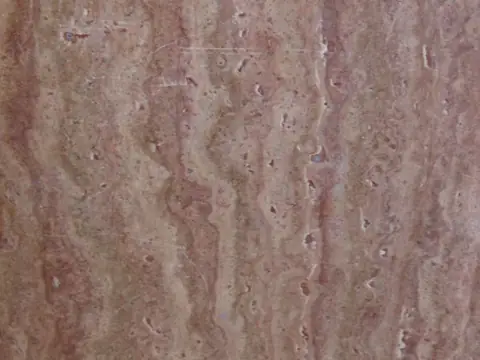 Ready price
Wood-grain sunmica for wardrobes, beds and office tables. Synchronised texture on premium shades.
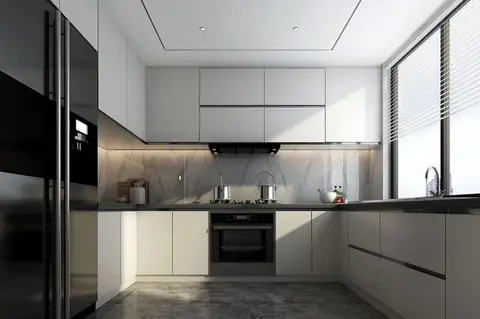 Ready price
Plain suede-finish sunmica in solid colours for kitchen shutters, wardrobes and wall panels.
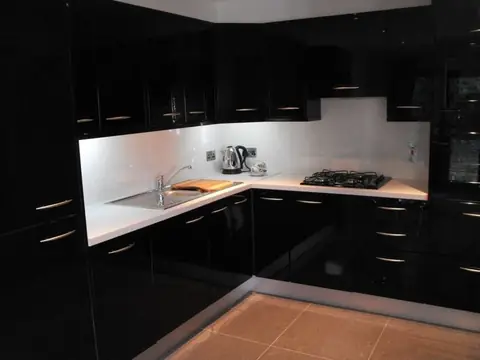 Ready price
Shiny sunmica with a protective film for kitchen shutters and TV units. Cheaper than acrylic.
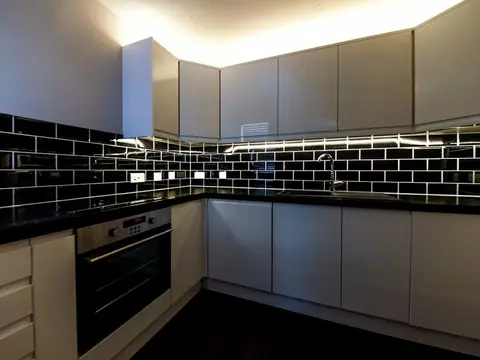 Ready price
Soft-touch matte laminate that hides fingerprints. Light scratches heal with heat. For premium kitchens.
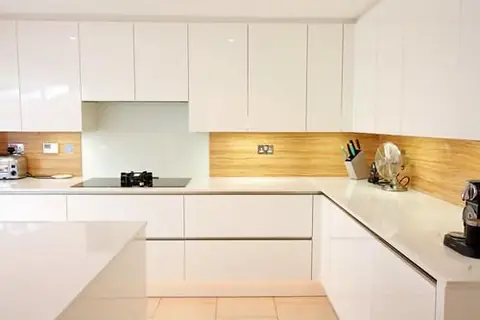 Ready price
Mirror-gloss acrylic sheet for kitchen shutters and feature walls. 8x4 ft, scratch-resistant film.
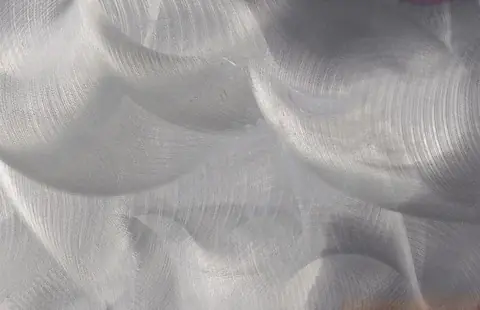 Ready price
Brushed steel, copper and gold look laminates for bars, reception desks and display units.
 Ready price
Plain balancing laminate for the inside of cabinets and drawer boxes. Stops ply from bending.
Browse all decorative laminates with live bulk prices. For washrooms and lockers, see Compact HPL Laminate 6–12 mm (Toilet Cubicles, Lockers) (from ₹10,400 / sheet); for floors, Laminate Flooring 8 mm (AC3, Click Lock) (from ₹67.00 / sq ft).
Which laminate thickness should you use?
0.6–0.8 mm liner goes on hidden faces: inside cabinets, shelf undersides and the back of shutters. Its job is to balance the board so it does not warp, and to seal the wood from moisture.
1 mm is the standard for anything you see and touch: shutters, table tops, exposed sides. It is thick enough to resist knocks and thin enough to cut and trim cleanly.
1–1.5 mm (including most acrylics and some high-gloss sheets) is used on kitchen shutters that are opened many times a day. Post-forming laminate is a 1 mm grade that bends around rounded edges with heat, used for curved counter and table edges. Compact HPL at 6–12 mm needs no board behind it at all.
Laminate flooring is a different product: an HDF core plank, usually 8 or 12 mm, with a wear layer rated AC3 (homes and light commercial) or AC4 (offices and shops). Keep it out of kitchen wet zones and bathrooms.
Laminate vs veneer vs acrylic vs PU paint: which is better?
All four are finishes on top of a board. The right one depends on budget, look and how much wear the surface takes.
| Finish | Look | Durability | Relative cost | Best for |
|---|---|---|---|---|
| Laminate | Printed colour or wood grain; matte, gloss or textured | High; resists scratches, heat and stains | Lowest | Wardrobes, kitchens, office furniture |
| Natural veneer | Real wood, each sheet unique | Medium; needs polish and care | Medium to high | Premium living rooms, doors, panelling |
| Acrylic | Deep mirror gloss, solid colours | Good, but shows fine scratches | High | Kitchen shutters |
| PU paint | Seamless, any colour, gloss or matte | Good; can chip at edges, repairable | Highest (labour heavy) | Designer shutters, curved and profiled panels |
For a rental, an office or a family kitchen, laminate gives the best value. Choose veneer or PU when the look matters more than budget. Whatever the finish, the board underneath matters more for life: see BWP vs BWR vs MR plywood before you choose.
How many laminate sheets do you need for a wardrobe?
One 8×4 ft sheet covers 32 sq ft. Work out the area of every face separately, decide which faces get decorative laminate and which get liner, then add 10–15% wastage for cutting and grain direction.
Worked example: a 6 ft wide, 7 ft high, 2 ft deep wardrobe with three shutters, one vertical partition and three shelves.
Sheet count for the example wardrobe
- Shutter fronts (decorative 1 mm): 6 × 7 = 42 sq ft, plus 15% = 48 sq ft, so 2 sheets.
- Shutter backs (liner 0.8 mm): the same 42 sq ft, so 2 liner sheets. Always balance the back of a shutter or it will bow.
- Carcass insides (liner): top and bottom 24 sq ft × 2 faces = 48, three shelves 36 sq ft × 2 faces = 72, partition 14 × 2 = 28, inner faces of the sides 28. Total 176 sq ft, plus 10% = 194 sq ft, so 7 liner sheets.
- Exposed outer sides (decorative): if one or both sides are visible, 14–28 sq ft, so 1 more decorative sheet.
- Total: about 3 decorative and 9 liner sheets. A loft unit above adds roughly 1 decorative and 2–3 liner sheets.
- Edge banding: shutter edges 54 running ft, shelf fronts 18 ft, carcass front edges 33 ft. About 105 ft (32 m), plus 10%, so a 50 m roll with some to spare.
For a kitchen, use the same method: every shutter gets decorative on the front and liner on the back, and the carcass gets liner both sides, or BWP ply with liner under the sink. Many designers simply plan 1 decorative sheet per 2.5–3 running ft of kitchen for shutters as a first estimate, then count properly once the drawing is final.
Which adhesive and edge banding should you use with laminate?
PVA synthetic resin adhesive (the white wood glue carpenters use) is the standard for pressing laminate onto ply. Spread it evenly with a notched spreader and press under weight or a press for several hours. As a rough guide, plan about 1 kg per 35–45 sq ft of laminate, and confirm with the pack.
Contact (rubber-based) adhesive is used where pressing is not possible, such as edges, curves and site repairs. It bonds on contact, so position carefully.
PVC edge banding covers the raw board edge and stops moisture getting in. For 18 mm boards use 22 mm wide tape; choose 0.8 mm for shelves and carcass, and 2 mm for shutters and table tops that get knocked. Match the colour code to the laminate, and machine-apply with hot-melt glue where possible.
Boards, adhesive and edge banding
Live prices, excl. GST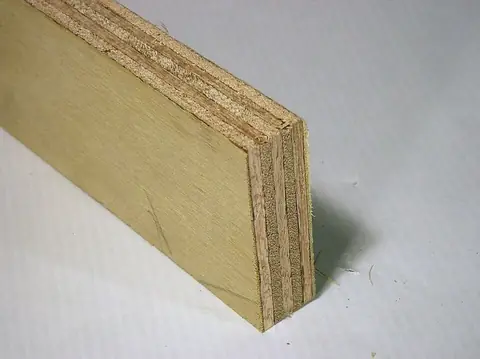 Ready price
Phenolic-bonded ply for wet areas, outdoor furniture and kitchen bases. Price is for 18 mm, 8x4 ft.
 Ready price
For kitchens and bathroom vanities that see water. Price is for 18 mm, 8x4 ft.
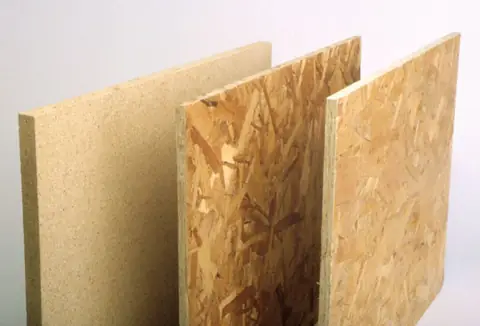 Ready price
Dense, termite-resistant board for kitchen shutters and CNC routing. 18 mm, 8x4 ft.
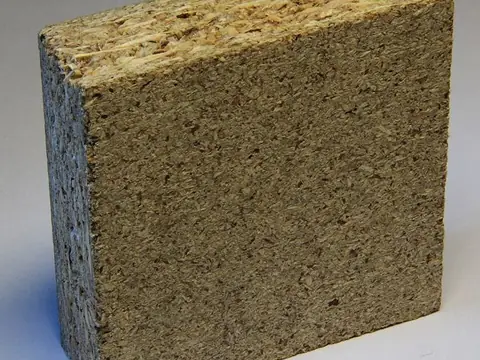 Ready price
Ready-finished board for office tables, storage and budget modular units. 18 mm, 8x4 ft.
 Ready price
White glue for laminate pressing, joinery and veneer work. Sets in 20–30 min, sold in buckets.
 Ready price
Edge tape to match laminates, for machine or hand application. 22 mm x 0.8 mm, 200 m roll.
 Ready price
Bendable laminate for rounded edges on kitchen counters, tables and shutters. Shaped with heat.
 Price on quote
Real teak, walnut and oak veneer on base ply for premium doors and panels. Price varies by species.
Need hinges, channels and baskets too? See furniture and door hardware and the full plywood, boards and laminates range.
How do you check laminate quality before buying?
Laminates look alike in a catalogue, so check a sample sheet before you place a bulk order.
- Thickness: measure with a vernier or micrometer. A "1 mm" sheet should measure close to 1 mm; thin sheets of 0.7–0.8 mm are often sold as 1 mm.
- Standard: look for IS 2046 (the Indian standard for decorative high-pressure laminates) or EN 438 in the test report or on the back of the sheet.
- Scratch test: drag a coin or key firmly across an offcut. A good sheet shows a mark but no white line through the print.
- Heat test: place a hot pan or steel tumbler of boiling water on it for a few minutes. There should be no blistering, gloss loss or colour change.
- Stain test: leave turmeric paste, tea and a marker on it overnight and wipe. Kitchen laminates should come clean.
- Back surface: the back should be evenly sanded, so the glue bonds over the whole sheet.
- Batch number: buy all sheets for one project from the same batch, because shades vary between print runs.
- Flatness and edges: the sheet should lie flat, without waviness or cracked corners from bad handling.
Doing several flats or an office fit-out? Send us your laminate codes, board grades and quantities and we will source them in one order: get a bulk quote, or browse supplies for interior designers and furniture makers.
Frequently asked questions
What is the difference between laminate and sunmica?
There is no real difference. Sunmica was an early brand of decorative laminate in India, and the name stuck as a common word for any laminate sheet glued onto plywood or board.
What is the price of a laminate sheet in India?
A standard 1 mm decorative laminate sheet of 8x4 ft typically costs about Rs 900 to Rs 2,500. Liner laminates cost less, around Rs 400 to Rs 800, while high gloss, anti-fingerprint and acrylic sheets usually cost Rs 1,800 to Rs 8,000, depending on brand and design.
Which is better, 0.8 mm or 1 mm laminate?
Use 1 mm laminate for visible surfaces such as shutters, table tops and exposed sides, because it resists knocks better. Use 0.8 mm liner laminate for hidden insides and the back of shutters to balance the board.
Is high gloss laminate good for kitchens?
Yes, high gloss laminate is popular on kitchen shutters because it looks bright and wipes easily. It shows fingerprints and fine scratches more than matte laminate, so many designers now prefer super matte anti-fingerprint laminate for daily-use kitchens.
Which is better, laminate or veneer?
Laminate is cheaper, tougher and needs no polishing, so it suits kitchens, wardrobes and offices. Veneer is real wood with a unique grain and looks more premium, but it needs polish and more care.
How many laminate sheets are needed for a wardrobe?
A typical 6 ft wide by 7 ft high wardrobe with three shutters needs about 3 decorative sheets and 9 liner sheets of 8x4 ft, including wastage. Each sheet covers 32 sq ft.
Is laminate flooring waterproof?
Most laminate flooring is water resistant on the surface but not waterproof, because the core is HDF board that swells if water gets into the joints. Use it in dry rooms and choose vinyl or SPC flooring for kitchens and bathrooms.
Get this list priced in 24 hours
Add the items to your requirement list or just tell us what you need. One quote in 24 hours, zero commission, GST invoice.
Prices on this page come live from the YesBatch catalogue, exclude GST and are for the listed minimum order. Your quote confirms the final price for your quantity, city and delivery date. For the full range, browse supplies for interior designers and fit-out firms.