A pouch bag is a flexible, heat-sealed packaging bag made from laminated film or paper, used for snacks, spices, tea, coffee, pet food and gifts. The most popular choice for D2C brands is a stand-up zip pouch in a 3-layer PET/MET-PET/PE laminate (about 100–130 micron); plain stock pouches typically cost ₹2–₹8 each, while custom-printed pouches cost ₹3–₹15 each depending on size, quantity and print method.
In this guide
- 1.What are the different types of pouch bags?
- 2.Which pouch material and micron thickness should you choose?
- 3.What pouch size do you need for 50 g, 100 g, 250 g, 500 g and 1 kg?
- 4.Rotogravure or digital printing: which is cheaper?
- 5.Which pouch bags are used for jewellery, gifts and e-commerce?
- 6.How do you choose the right pouch bag for your product?
- 7.Frequently asked questions
What are the different types of pouch bags?
Pouch bags are named by how they are sealed and how they stand. Pick the format first, then the material. This table covers the formats Indian brands use most.
| Pouch type | Best for | Stands on shelf? | Typical extras |
|---|---|---|---|
| Stand-up zip pouch (doypack) | Snacks, dry fruits, spices, tea, protein powder | Yes | Zip lock, tear notch, window, hang hole |
| Three-side seal (flat) pouch | Sachets, samples, masala, face packs, 5–100 g | No | Tear notch; cheapest format |
| Centre seal / pillow pouch | Chips, namkeen, biscuits (on FFS machines) | No | Nitrogen flush, printed from roll stock |
| Flat bottom / box pouch | Premium coffee, pet food, 500 g–2 kg | Yes, very stable | Side gussets, slider zip, five printable panels |
| Kraft paper pouch with window | Organic, tea, millets, bakery, gifting | Yes | Inner PE or foil lining, zip, clear window |
| Valve pouch | Roasted coffee beans and ground coffee | Yes | One-way degassing valve, zip |
| Retort pouch | Ready-to-eat curries, rice, pet food | Usually flat | Foil layer, survives 121 °C sterilisation |
| Metallised nitrogen-flush pouch | Chips, nuts, crisps, extruded snacks | Pillow or stand-up | High oxygen barrier, nitrogen filling |
| Spouted pouch | Juices, baby food, liquid detergent, oils | Yes | Screw spout and cap |
| Zip-lock poly bag | Pharmacy, hardware, spares, samples | No | Clear LDPE, write-on panel |
| Velvet, organza or drawstring pouch | Jewellery, gifts, wedding favours, gadgets | No | Satin ribbon or cord, logo print |
Which pouch material and micron thickness should you choose?
Most food pouches are laminates: two to four films bonded together, each doing a job. The outer layer takes the print, the middle layer blocks oxygen, light and moisture, and the inner layer heat-seals and touches the food.
PET/PE (2-layer, clear or white): a good general pouch for dry, short shelf-life products such as sugar, rice or namkeen sold quickly. PET/MET-PET/PE (3-layer metallised): the default for snacks, dry fruits and spices; the metallised layer gives a strong barrier at a moderate cost. PET/Alu foil/PE: the best barrier, used for coffee, milk powder, protein powder and anything with 9–12 months shelf life. BOPP/MET-BOPP: light, crisp film used for chips and biscuit packs. Kraft paper/PE or kraft/foil/PE: natural look, with a plastic or foil lining doing the real barrier work.
Thickness is quoted in micron (µm). As a rough guide: 40–60 micron for chips and pillow packs, 80–100 micron for 50–250 g stand-up pouches, 100–130 micron for 500 g–1 kg zip pouches, and 120–150 micron for heavy or sharp products such as pet food and dry fruits with shells. Retort pouches are usually 4-layer (PET/Alu/Nylon/CPP) at about 110–130 micron.
Check the current Plastic Waste Management Rules for your product and packaging size, including EPR registration for brand owners, before you finalise a laminate.
What pouch size do you need for 50 g, 100 g, 250 g, 500 g and 1 kg?
Pouch size depends on the product's bulk density, not just its weight. 250 g of sugar fits in a pouch half the size of one that holds 250 g of makhana. Use the table as a starting point for dense products such as spices, tea, rice, dals or coffee beans, then fill a sample pouch with your actual product before you order.
| Fill weight | Typical size (mm) | Typical size (inches) | Light, bulky snacks need |
|---|---|---|---|
| 50 g | 90 × 140 + 50 gusset | 3.5 × 5.5 in | About a 100 g pouch |
| 100 g | 110 × 170 + 60 gusset | 4.5 × 6.5 in | About a 250 g pouch |
| 250 g | 140 × 210 + 80 gusset | 5.5 × 8.5 in | About a 500 g pouch |
| 500 g | 170 × 260 + 90 gusset | 6.5 × 10 in | About a 1 kg pouch |
| 1 kg | 210 × 310 + 110 gusset | 8.5 × 12 in | Flat bottom pouch, 1.5–2 kg size |
Food pouches
Live prices, excl. GST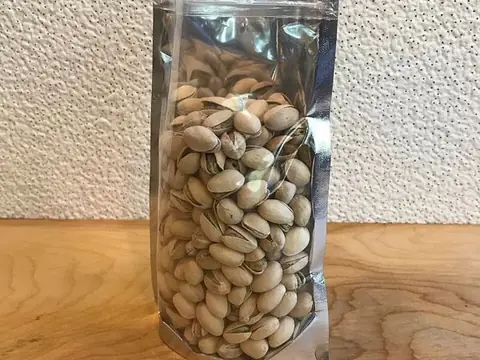 Price on quote
Food-safe pouch with zip. Printed with your design.
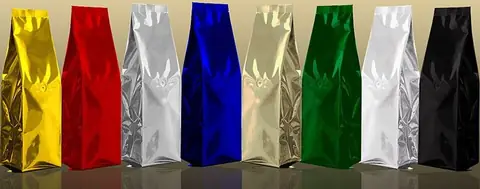 Ready price
One-way valve keeps coffee fresh.
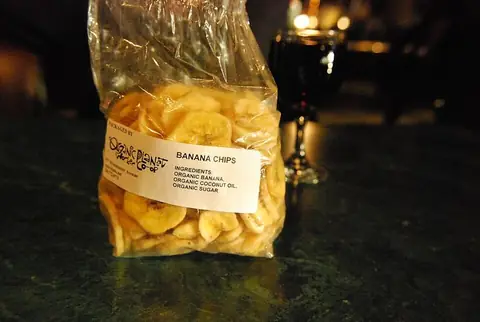 Price on quote
Printed metallised pillow pouch that holds nitrogen so chips stay crisp.
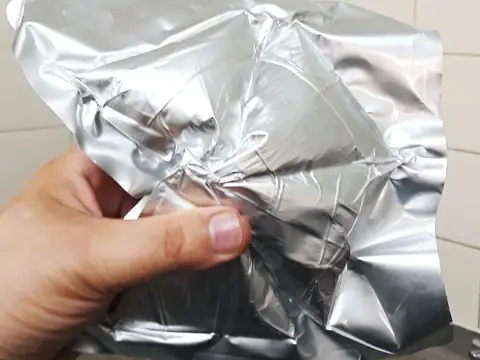 Price on quote
4-layer foil pouch that survives 121°C sterilising. Shelf-stable meals and gravies.
 Price on quote
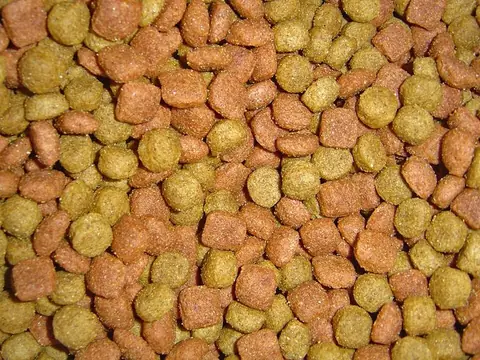
Strong laminated bag with zip and grease barrier. Stands on shelf.
Allow 25–35 mm headspace above the product for the zip and heat seal. If you will fill on a machine, confirm the pouch size with the machine supplier too.
Rotogravure or digital printing: which is cheaper?
Rotogravure is the standard for printed pouches in India. Each colour needs an engraved cylinder, typically ₹2,500–₹6,000 per cylinder, so a 6–8 colour design costs roughly ₹15,000–₹45,000 in cylinders before a single pouch is printed. MOQs are usually 10,000–25,000 pouches per design (or about 300–500 kg of laminate). The per-piece price is lowest at volume, and the cylinders can be reused for reorders.
Digital printing needs no cylinders. You can order 500–2,000 pouches, and even mix several designs (SKUs) in one run. The per-piece price is higher, often 2–3 times the rotogravure price, but there is no upfront plate cost. It is the right choice for launches, test batches and seasonal packs.
A simple rule: under about 5,000 pouches per design, go digital; above 10,000, go rotogravure. In between, compare quotes. You can also start with plain stock pouches and a printed label, then move to printed pouches once a product sells.
| Pouch | Plain / stock | Digital printed (500–2,000) | Rotogravure (10,000+) |
|---|---|---|---|
| 100 g stand-up zip pouch | ₹2–₹4 | ₹8–₹15 | ₹3–₹6 |
| 250 g stand-up zip pouch | ₹3–₹6 | ₹10–₹20 | ₹4–₹8 |
| 1 kg flat bottom pouch | ₹10–₹18 | ₹25–₹45 | ₹12–₹25 |
| 250 g kraft pouch with valve | ₹6–₹12 | ₹15–₹30 | ₹8–₹15 |
| Organza or velvet gift pouch | ₹3–₹30 | Logo print adds ₹2–₹10 | Not applicable |
Prices move with film and aluminium rates, size and the number of colours. Use these ranges to sanity-check quotes; our live prices are on each product page, for example Printed Stand-up Zip Pouch (approx. ₹9.80 / pouch) and Kraft Pouch with Valve (from ₹10.00 / pouch).
Which pouch bags are used for jewellery, gifts and e-commerce?
Not every pouch is a food laminate. For jewellery, return gifts and accessories, brands use fabric pouches: organza (sheer, cheap, festive), velvet or suede (premium, protects metal from scratches) and cotton or canvas drawstring pouches. For gadgets and fragile items, a bubble pouch inside a courier bag prevents damage. Pharmacies and clinics use clear zip-lock pouches for loose tablets.
Gift, protective and zip-lock pouches
Live prices, excl. GST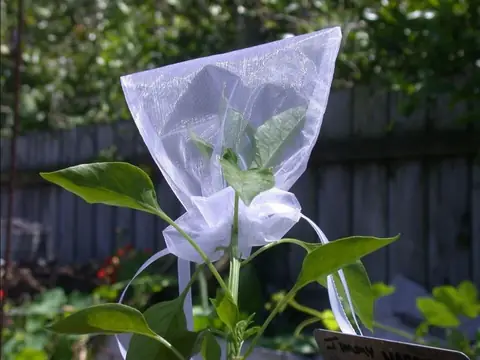 Ready price
Sheer drawstring pouch for jewellery, soaps, favours and sample kits.
 Ready price
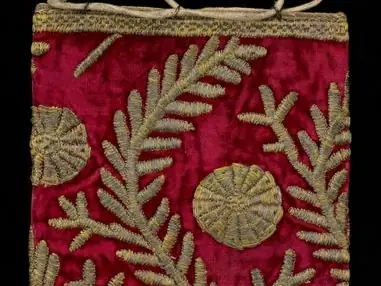
Soft pouch that stops scratches. Logo print on request.
 Ready price
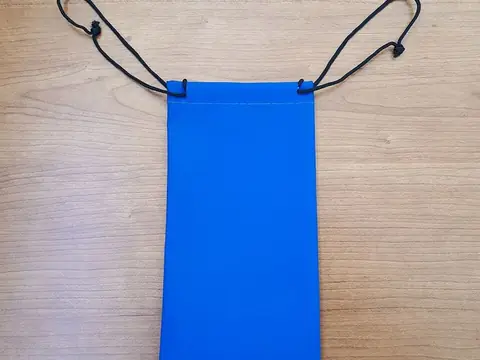
Soft carry pouch for earbuds, trimmers and power banks. Logo print available.
 Ready price
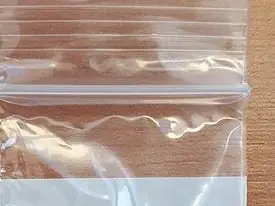
Self-seal pouch for bottles and jars.
 Ready price
Clear zip pouches with dosage chart print (morning, noon, night). Pack of 1000.
Browse jewellery and gift packaging, protective packaging and all pouches.
How do you choose the right pouch bag for your product?
Work through these questions with your supplier before you approve artwork. Getting them right avoids the two costly mistakes: pouches that are the wrong size, and pouches that let the product go stale before its best-before date.
Pouch bag buying checklist
- Shelf life needed: under 3 months, PET/PE is often enough; 6–12 months, use metallised or foil laminate.
- Product type: oily, sharp, powdery or liquid products need thicker inner layers or a spout.
- Filling method: hand-filled pouches need a wide mouth and zip; machine-filled packs often use roll stock instead of ready pouches.
- Sealing: plan for a band sealer or impulse sealer at your packing table. We do not list sealers yet, but you can add one to your quote and we will source it.
- Nitrogen flushing for chips, nuts and crisps to stop rancidity and crushing.
- Window or no window: windows sell, but they let light in. Avoid them for oils, nuts and coffee.
- Compliance space: leave room on the back for the FSSAI logo, nutrition table, MRP, batch and dates.
- Sample first: fill, seal and drop-test a physical sample before placing a bulk order.
Need help with the back-panel text? See our guide to product label design. Launching a snack brand? See what we supply to snacks and namkeen brands, coffee brands and jewellery brands, or get a packaging quote.
Frequently asked questions
What is a pouch bag?
A pouch bag is a flexible bag made from laminated plastic film, paper or fabric that is sealed to hold a product. Food pouches are usually heat-sealed laminates with a zip, while gift pouches are made of organza, velvet or cotton with a drawstring.
Which pouch is best for food packaging?
For most dry foods such as snacks, spices and dry fruits, a stand-up zip pouch in a 3-layer PET, metallised PET and PE laminate is the best balance of barrier, look and cost. Use foil laminate for coffee and protein powder, and retort pouches for ready-to-eat meals.
What size pouch is needed for 250 g?
For dense products such as tea, spices or rice, a 250 g stand-up pouch is typically about 140 by 210 mm with an 80 mm bottom gusset. Light, bulky snacks such as makhana or chips need a much larger pouch, so always test with your actual product.
What is the price of a printed pouch in India?
A custom-printed stand-up pouch typically costs about 3 to 8 rupees each at 10,000 or more pieces with rotogravure printing, and about 8 to 20 rupees each for small digital print runs of 500 to 2,000, depending on size and material.
What is the minimum order quantity for printed pouches?
Rotogravure printed pouches usually have an MOQ of 10,000 to 25,000 pieces per design, plus cylinder costs. Digital printing allows runs from about 500 to 2,000 pouches with no cylinder cost.
What micron is a standard zip lock pouch?
Food zip pouches are usually 80 to 130 micron in total laminate thickness. Smaller 50 to 250 g pouches are around 80 to 100 micron, and 500 g to 1 kg pouches are around 100 to 130 micron.
Are kraft paper pouches eco-friendly?
Kraft pouches look natural but most have a plastic or foil lining, so they are not fully recyclable or compostable. If sustainability is the goal, ask for mono-material recyclable laminates or certified compostable films.
Get this list priced in 24 hours
Add the items to your requirement list or just tell us what you need. One quote in 24 hours, zero commission, GST invoice.
Prices on this page come live from the YesBatch catalogue, exclude GST and are for the listed minimum order. Your quote confirms the final price for your quantity, city and delivery date. For the full range, browse supplies for snacks and namkeen brands.